
Home / Fat Transfer / Fat Transfer Under Eyes
Fat Transfer Under Eyes
Overview
- Fat transfer under the eyes allows you to use your own body fat to reverse the signs of aging and regain lost under-eye volume.
- Unlike dermal fillers, fat transfer is considered permanent and lasts for years.
- The risk of problems or allergies is extremely low with fat transfer procedures because they use your body fat for natural enhancement.
What Is Fat Transfer Under the Eyes?
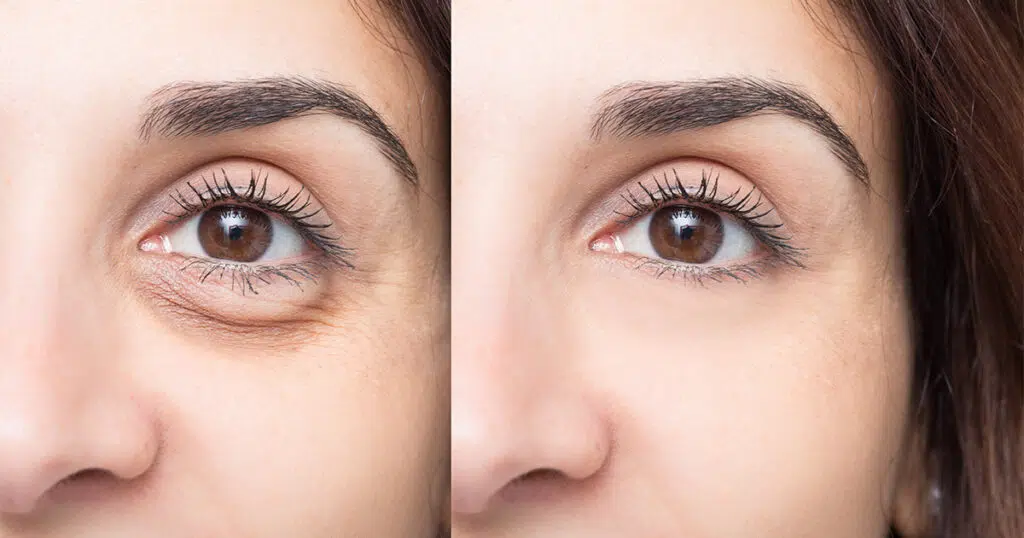
Often called tear trough fat grafting, fat transfer under the eyes is a plastic surgery procedure that restores volume, reduces hollowness, and smooths out dark circles under the eyes. This is achieved by removing fat from areas where you don’t want it, like your abdomen or flanks, and injecting that fat into the area beneath your eyes. The procedure is a natural way to correct volume loss as it uses your own body fat, thus greatly reducing the risk of allergies and eliminating the need for the constant top-ups dermal fillers require.
Why Do Patients Choose Under-Eye Fat Transfer?
Getting a fat transfer under your eyes isn’t the only choice you have for restoring lost under-eye volume, but for many patients it is the best option. That’s because a fat transfer offers many benefits over dermal fillers, including:
- More permanence than dermal fillers
- Using your own fat, thereby minimizing allergic reactions
- Corrects under-eye hollowing, dark shadows, and thinning skin
- Ideal for patients looking for a softer, more natural result over time
- Harvesting donor fat via liposuction sculpts other problem areas
How the Procedure Works
While it takes skill and experience to perform well, the steps of a fat transfer under the eyes are easy to understand. First, your plastic surgeon will use gentle liposuction to remove fat from places where you might have a little extra. The abdomen, thighs, and flanks are common donor sites, but your surgeon can perform liposuction almost anywhere you have excess fat.
The removed fat is collected, washed, and purified. Then, the healthiest fat cells are chosen for injection. The chosen cells are loaded into a syringe and then injected beneath the eyes using microdoses. Microinjections insert the fat cells a bit at a time, allowing your surgeon to precisely build layers of fat exactly where they want them.
Under Eye Fat Grafting vs. Other Options
We understand that the world of plastic surgery can be confusing, especially when medical terms are bandied about. When looking into replacing lost volume under your eyes, there are two other procedures you may hear a lot about. Here we’ll explain them both so you can distinguish between them and a fat transfer under the eyes.
Fat Transfer vs. Tear Trough Filler
Tear trough filler is a procedure in which a plastic surgeon injects dermal fillers into the area under the eyes to restore volume. The results are almost instantaneous, and when hyaluronic acid (HA) fillers are used, they can be reversed if you’re unhappy with your new appearance.
Unfortunately, fillers are temporary, and you will require follow-up visits periodically if you wish to keep your new look. Fat transfer under the eyes is a bit more subtle, and it takes longer to see the new you — but the results are very long-lasting. Some patients may need a touch-up in a few years as the aging process continues, but others enjoy their results for life.
Fat Transfer vs. Lower Blepharoplasty
Blepharoplasty is the surgical repair of an eyelid. Lower blepharoplasty removes excess fat and skin beneath the eyes while a fat transfer adds fat. The two procedures may sound like polar opposites, but they’re often performed together. This is because the loss of under-eye volume can leave excess, sagging skin behind. A lower blepharoplasty removes this excess skin, and a subsequent fat transfer under the eyes restores the lost volume.
Who Is (and Isn’t) a Good Candidate?
The results of a fat transfer under the eyes can feel almost miraculous to the right candidate, but not everyone is that candidate. You’re a good candidate for a fat transfer if you:
- Suffer mild to moderate volume loss
- Have dark shadows from thinning skin
- Don’t want synthetic fillers
- Are okay with subtle, gradual change
You are probably not a good candidate if you:
- Have major skin laxity or eye bags (better treated with blepharoplasty)
- Are extremely lean with no donor fat
- Want dramatic, instant results
Timeline of Recovery and Results
Although both liposuction and fat transfer under the eyes are minimally invasive procedures, recovery is not immediate. You may have some activity restrictions, and your plastic surgeon may require you to wear a compression garment over areas where they performed liposuction. Recovery generally looks as follows:
- Immediate Recovery
- Swelling and bruising for one to two weeks
- Avoiding strenuous activity and eye pressure
- Sleeping with head elevated
- Longer-Term Healing
- Initial fat reabsorption of 20–40% is typical
- Final results visible around 3 months when residual swelling eases
- Touch-up optional but rarely needed
Safety, Risks, and How Surgeons Prevent Complications
After a fat transfer under the eyes, you should expect swelling, puffiness, and some discoloration or bruising. You may also notice asymmetry between your eyes or feel as though you look overly full beneath your eyes. This is perfectly normal.
Asymmetry occurs because your body may not swell evenly, making the area under your eyes appear uneven temporarily until the swelling goes down. If you look overdone, you probably are! This is intentional: your plastic surgeon will account for the fact that some of the transferred fat cells will die. Things will settle down, and when they do, you should look just right.
While quite rare, some serious complications can happen with a fat transfer under the eyes. These include the development of fat nodules, overcorrection, and vascular issues. Surgeons reduce the risk of these events by injecting very small amounts of fat at a time to avoid overcorrection. They will also avoid the tear trough itself and purify the fat cells to prevent oil cysts and irregularities in them. Of course, skilled surgeons also avoid injecting fat into high-risk zones near blood vessels and nerves.
Are Your Before & After Expectations Realistic?
Plastic surgeons know that patients who go into a procedure with realistic expectations are often quite happy with their results. Those who have unrealistic expectations, however, tend to be frustrated and disappointed. It’s important to understand that an under-eye fat transfer is subtle. The aim is to soften the area rather than to dramatically fill or pump it up.
During your free virtual consultation, be sure to ask for before-and-after photos of your plastic surgeon’s work. This is an excellent way to visualize both the quality of their work and how much of a change patients see after the procedure. Studying actual results can make it easier to visualize the changes you can expect after your fat transfer.
When Fat Transfer Doesn’t “Stick” – What to Do
It’s rare, but from time to time some patients watch their newly transferred fat fade away in a few months. This is often caused by smoking, rubbing the eyes, and persistent inflammation during recovery. It’s vital that you follow all of your post-op care instructions closely. Even if you do, it’s possible, albeit unlikely, that the fat cells simply won’t take hold.
If you’re one of the unlucky few, you do have options. You can try again with a revision fat transfer under the eyes, switch to an HA filler, or opt for lower eyelid surgery. Your plastic surgeon can help you assess what went wrong and find the best way to move forward.
Frequently Asked Questions
Absolutely! Many surgeons do recommend working on the under-eye area and cheeks simultaneously to create a smoother blending of the two, but this isn’t always necessary. At Mia Aesthetics, we tailor every surgery to the unique patient, so we can meet your needs without doing more or less than is necessary to reach your aesthetic goals. We can customize your procedure and do as much or as little as you want.
Yes, but not directly. Fat transfer under the eyes helps eliminate shadows from volume loss, which can greatly reduce the appearance of dark circles. It cannot, however, change your skin color or reverse melanin-related discoloration. Skin treatments can often help with discoloration and may be used in combination with under-eye fat transfer.
The fat that survives transplantation is considered permanent. Some patients request a touch-up in a few months when fully healed to add a bit more volume, if desired. As the aging process continues, other patients opt to have a touch-up done in a few years, if necessary, to hold the signs of aging at bay. But most patients are happy with their results for many years after a fat transfer under their eyes.
You will need to wait about seven to 10 days to wear makeup after your procedure. Makeup use resumes after the fat injection points have fully closed and healed.
Minor asymmetry is common during the healing phase since your eyes may swell to different degrees. This typically evens out on its own over time. If it doesn’t even out to your satisfaction, your plastic surgeon can perform a touch-up procedure to even things out.
If you’ve been using HA fillers under your eyes and would like to get a fat transfer procedure instead, you should wait three to six months after your filler dissolves. Placing fat while there is still filler present can create contour issues and mar your results when the remaining filler dissolves.
Unfortunately, we have seen patients who were victims of overfilling. You can avoid this problem by choosing a skilled and experienced plastic surgeon, like those at Mia Aesthetics, who understands the importance of building fat conservatively using microinjections. Fortunately, you can get liposuction to remove the excess fat if your under-eye area was overfilled.
Table of Contents
- What Is Fat Transfer Under the Eyes?
- Why Do Patients Choose Under-Eye Fat Transfer?
- How the Procedure Works
- Under Eye Fat Grafting vs. Other Options
- Who Is (and Isn’t) a Good Candidate?
- Timeline of Recovery and Results
- Safety, Risks, and How Surgeons Prevent Complications
- Are Your Before & After Expectations Realistic?
- When Fat Transfer Doesn’t “Stick” – What to Do